My Story
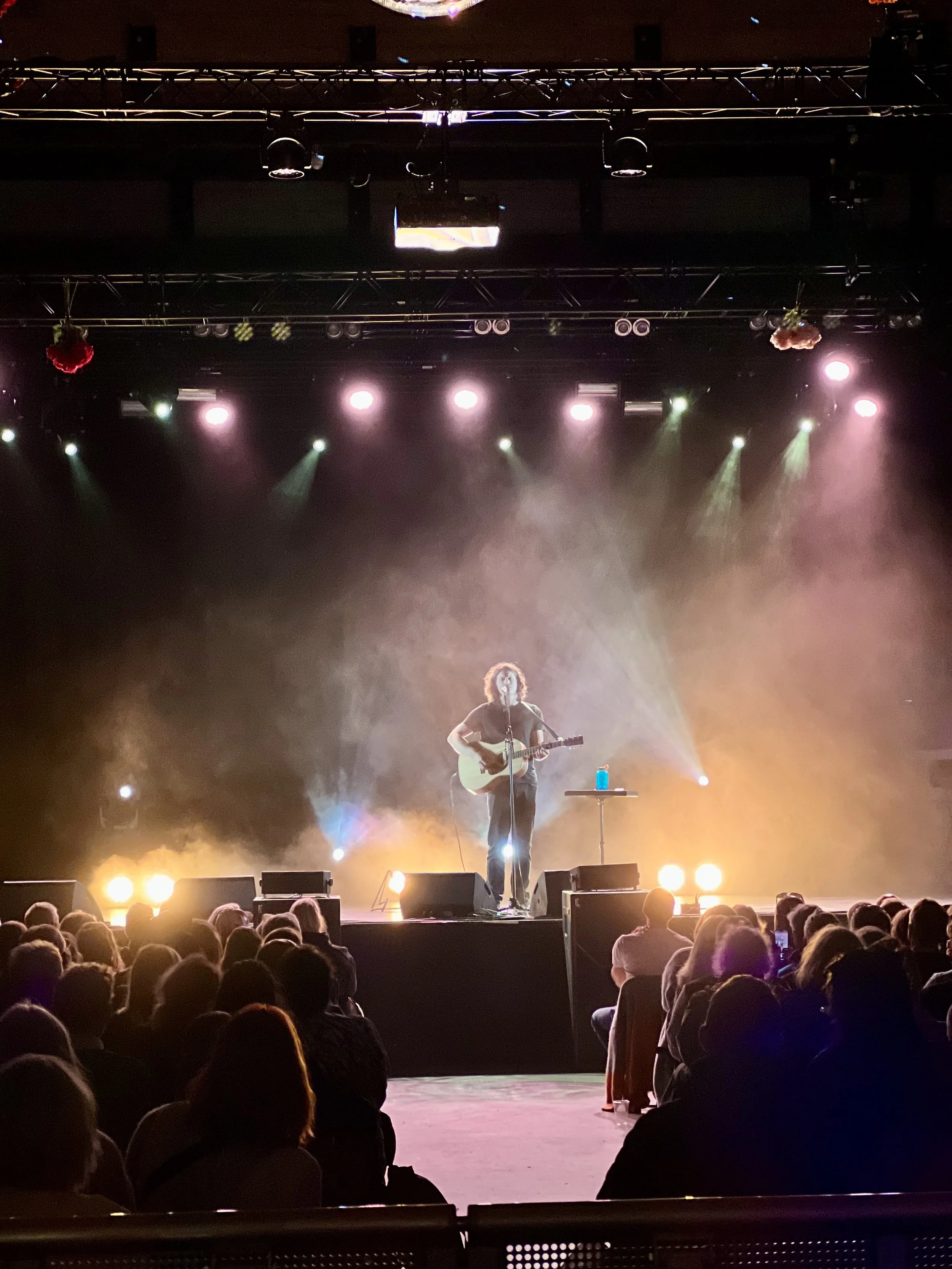
In days of yore, before the pandemic and before my furniture, I had a little music career as a singer-songwriter.
In 2017, my album Anthropocene, produced by Ken Coomer, the former drummer for Wilco, was released and reviewed on Pitchfork and elsewhere. My song “Falling Water” collected millions of streams on a Spotify coffeehouse playlist. I toured the US, Canada, Mexico, and Europe, mostly supporting bigger artists.

In spring of 2020, I released an album right as COVID shut the world down.
I had some success with my first album, but not enough to be a headliner selling out shows. Touring as an opener was my primary chance at promoting my album and making money with music, and suddenly it was not an option. An already challenging career path suddenly became impossible.
The pandemic pruned my music career, but where one branch grew, two new projects emerged.
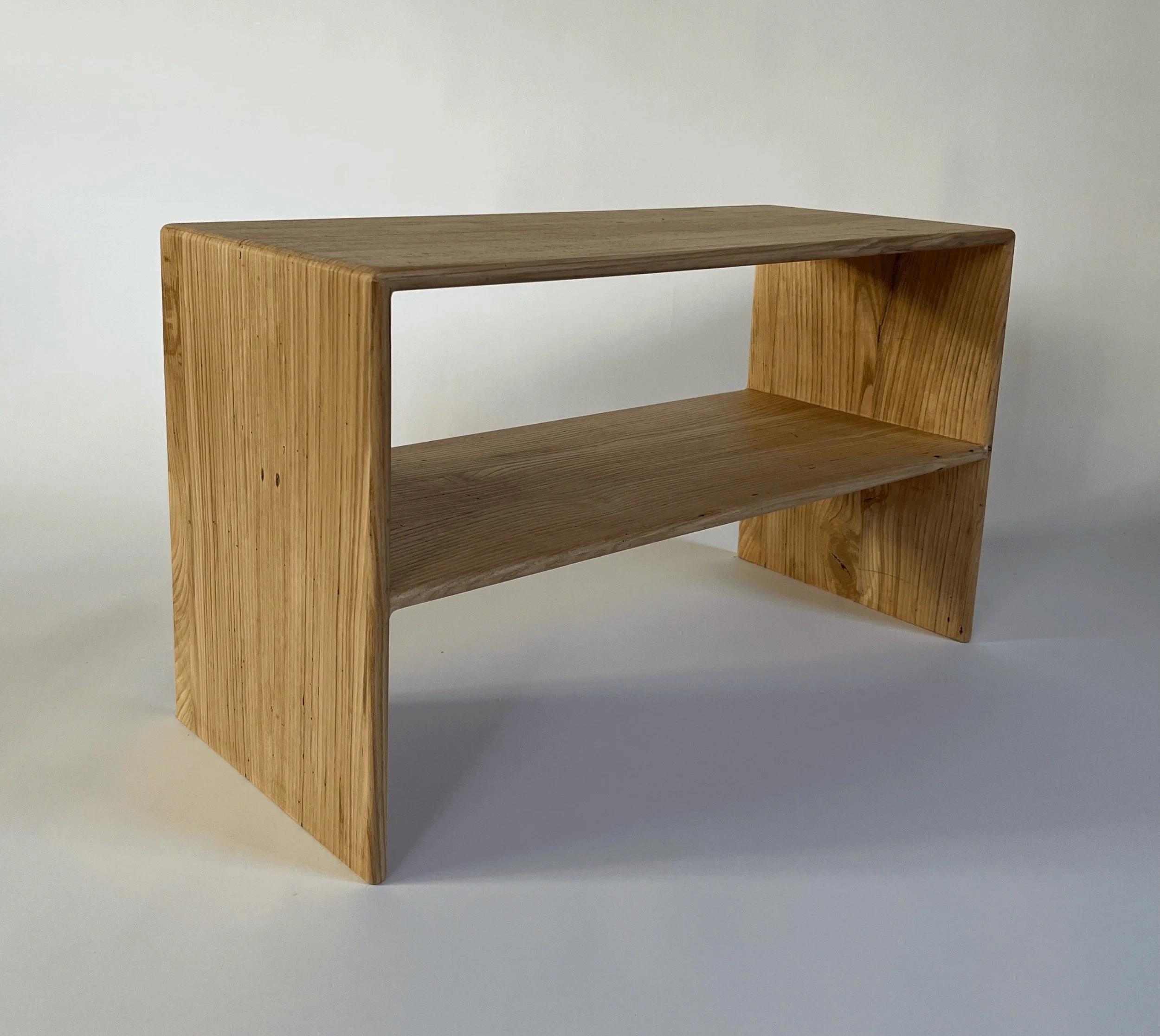
I began building myself furniture.
I had moved into a place on my own after a lot of wandering and living light. I didn’t have the funds to buy nice stuff, but I had access to lumber I’d helped my dad mill over the years and his hobbyist woodworking shop.
I also began to learn to code, working on a streaming platform that would pay 5x more than Spotify.
Having accumulated about as many streams as some of my favorite artists, I realized that royalties are far too low to sustain most artists. This project, called Tuneswell, is still underway, and the beta is in testing at tuneswell.com. If you’re an artist, please add your music. Email me when you find bugs.

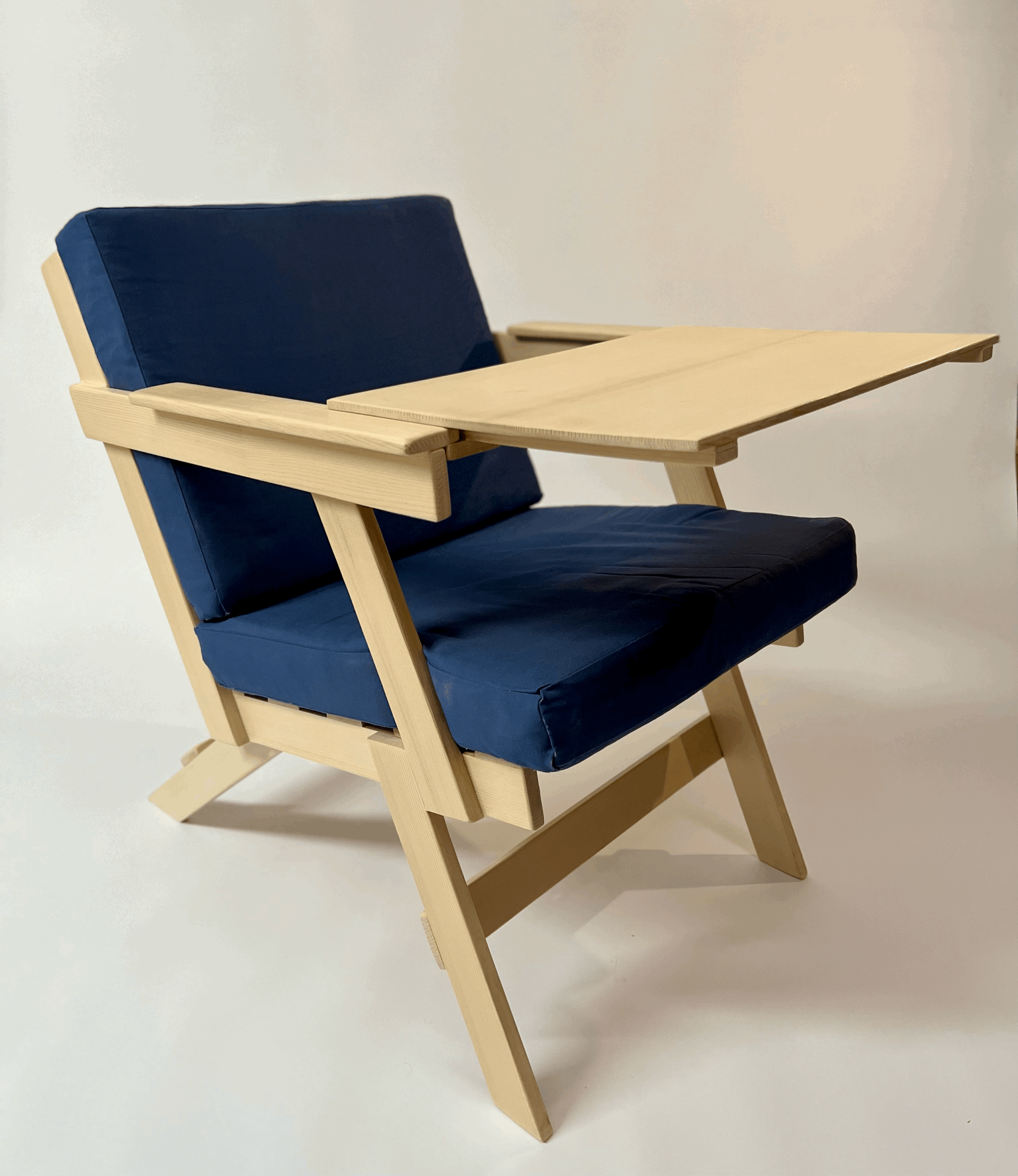
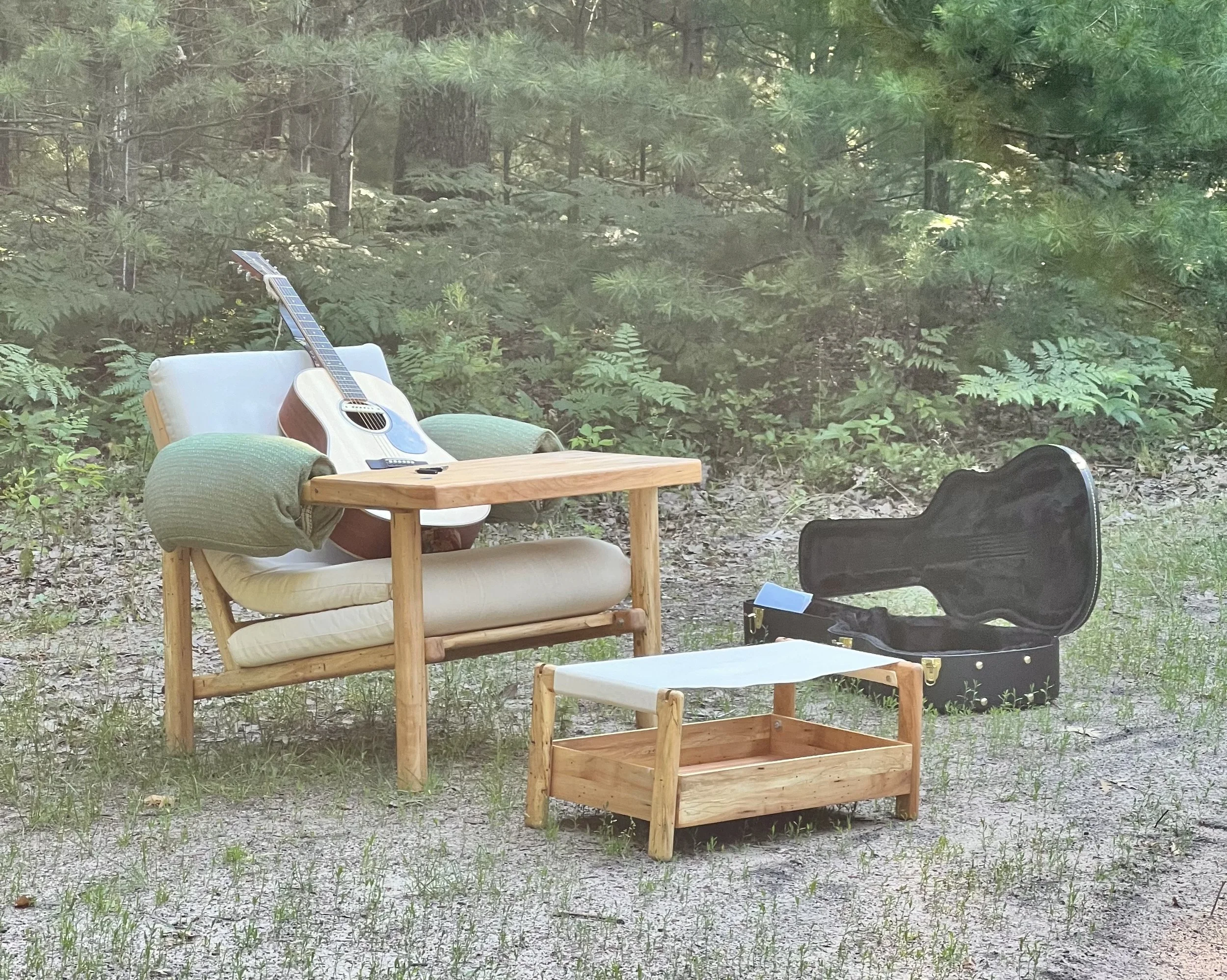
My multifunctional chair design was discovered slowly, as a result of an effort to use material that would otherwise be burned.
Prototype 1 in Spruce
I briefly worked for someone who mills tone woods for a major acoustic guitar company. I noticed that he burned a lot of material, and he allowed me to experiment with his scrap book-matched spruce guitar tops, which were thin boards, generally about 1/4” x 10” x 24”. I decided to try laminating them and testing their structural properties as a chair. After finishing my first lounge-type chair, I realized that the boards could span the arms and become a tabletop.
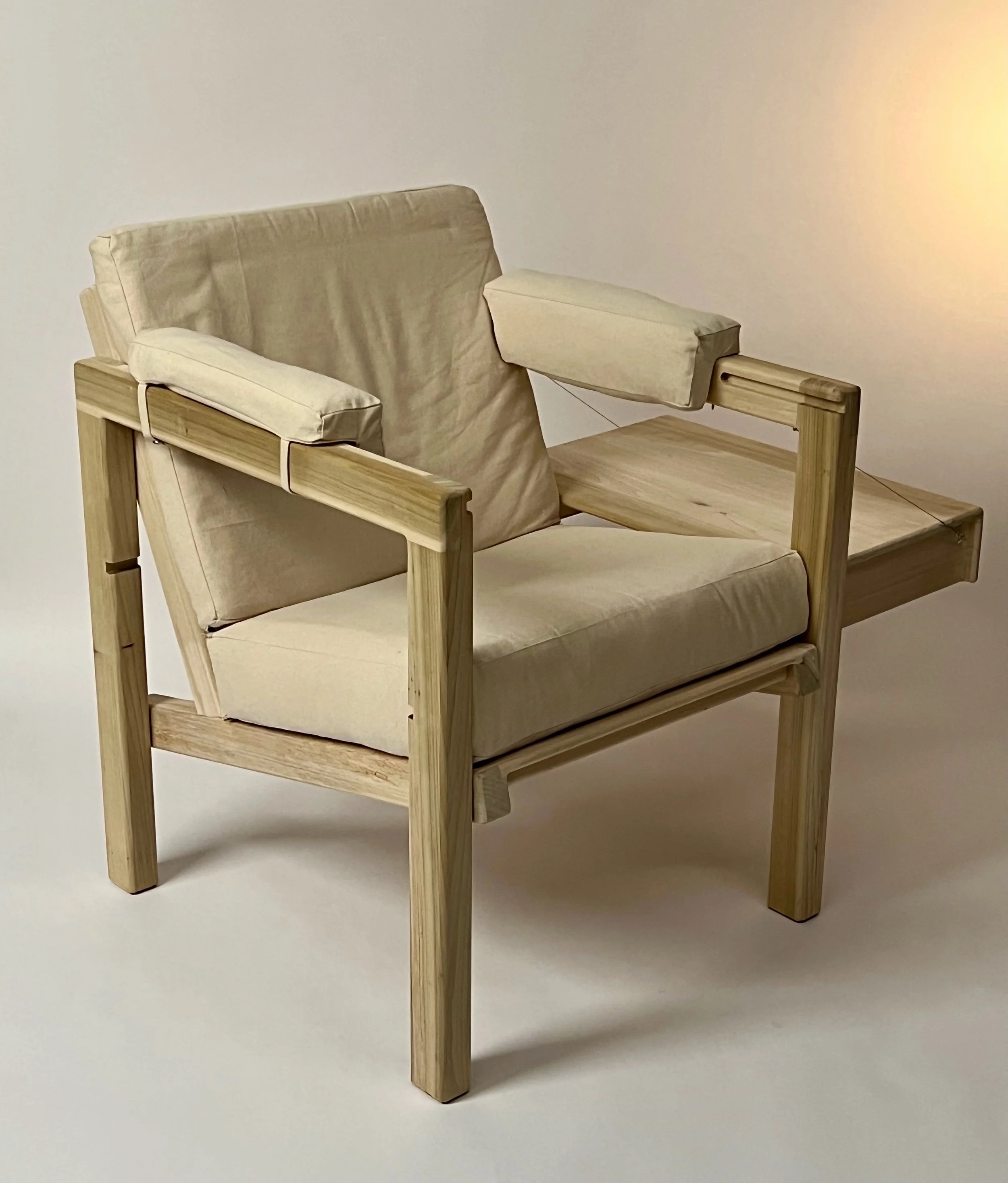
Prototype 2 in Poplar
With the first prototype, I realized that I would need to have a place to put a tabletop attachment when it’s not in use. With the second prototype, I gave the chair grooves to receive the tabletop on the arms both for active use and secondary. The grooves on the sides were not enough to support the table, so I added wire with hooks and loops to support the table in the side orientation. Not very elegant.
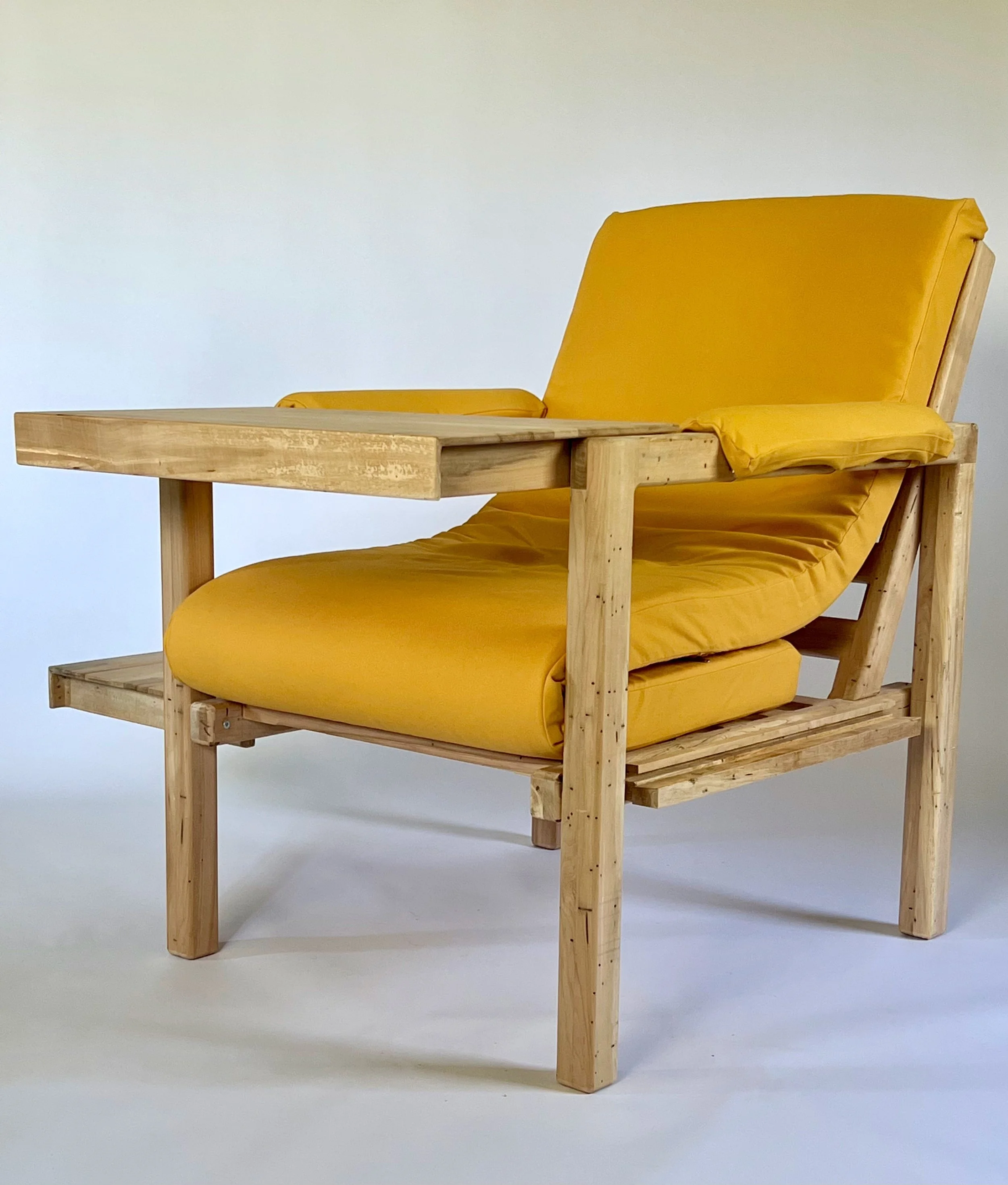
Prototype 3 in Spalted Maple
My third prototype is the first to see the groove and stud attachment mechanism, but it was on the inside of the arm rather than the outside, which required the user to grasp the table from the front and back, not the sides. This prototype featured two tabletops that had extendable floating supports under the seat. The problems with the winged tabletop design, apart from the poor support, was that it forced the seat itself to be flat rather than a more desirable angle. The wings also caused the chair to take up a larger footprint.
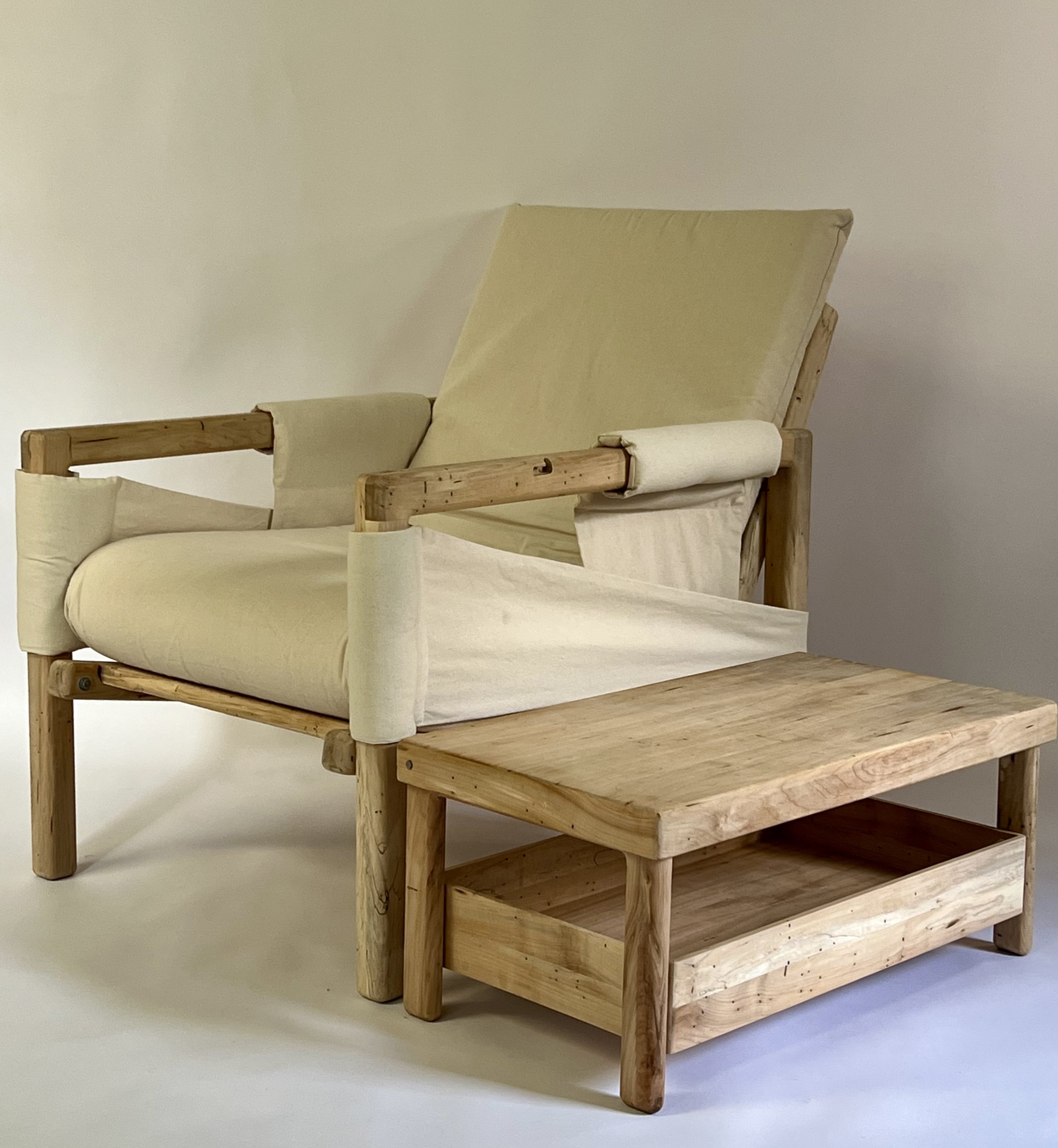
Prototype 4 in Spalted Maple
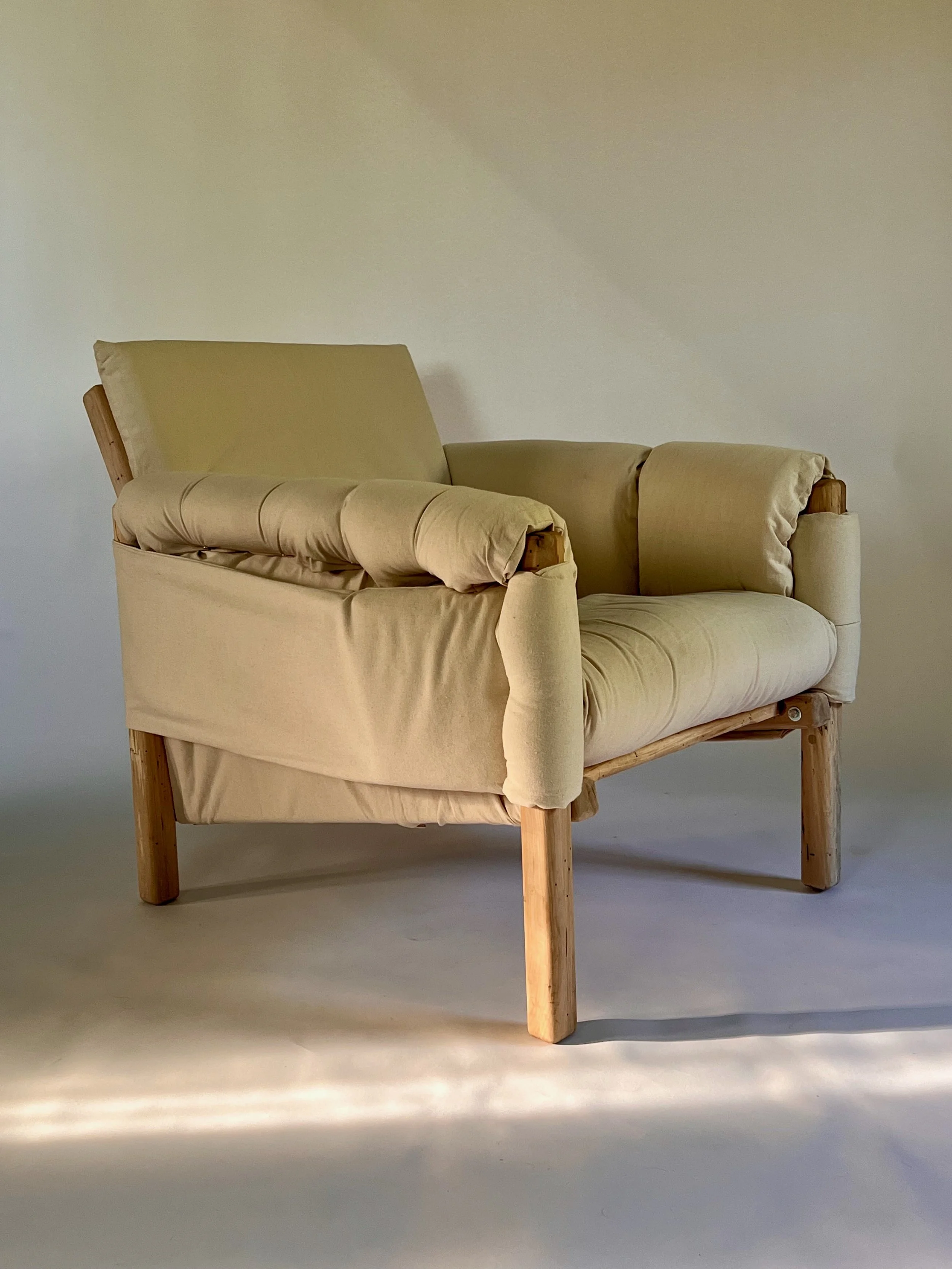
Prototype 4 got a better seat angle, a table for the tabletop, the groove for the attachment moved to the outside of the arms, and I experimented with modular arm cushioning, designed to be more-easily replaced than integrated upholstery. Interestingly, the table’s height was initially chosen so that the table could be placed on my desk and used as a standing desk platform. I only realized I could sneak some fabric under the tabletop after I had already built it.
In spring of 2024, I quit my job as a mailman, moved my stuff into storage, and started traveling to get feedback on my projects, living in the back of my minivan.
I made social media “man on the street” content for Tuneswell and for my chair, playing music in breweries for money. In August, while playing a music festival in Bodø, Norway, my first chair reaction video went viral, helping me go from just 170 followers on my page to thousands overnight. After that festival, I returned to Indiana to use my dad’s shop to build festivals.




Returns Policy
Returns accepted within 30 days for a refund on the cost of the item purchased. Customers responsible for return shipping costs. Customized products might not be refundable.
Contact
Peter